

How to Get Rid of Pet Odor in House: A Complete Guide for Fresh-Smelling Homes
There’s nothing better than sharing your home with a beloved dog or cat. Pets bring companionship, comfort, and joy into our lives. Unfortunately, they can also bring something less pleasant: lingering pet odors that seem impossible to eliminate.
If you've ever walked into your home and immediately noticed a dog smell, wet fur odor, litter box scent, or a mysterious pet-related odor trapped in furniture and carpets, you're not alone. Pet odors can penetrate fabrics, flooring, bedding, upholstery, and even the air itself.
The good news is that you don't have to choose between a clean-smelling home and your furry family members. With the right cleaning habits, odor-removal strategies, and preventative measures, you can enjoy both.

In this comprehensive guide, we'll explain exactly how to get rid of pet odor in house, why pet smells occur, and the best long-term solutions for keeping your home fresh year-round.
Why Pet Odors Build Up Inside a Home
Before tackling odors, it's important to understand where they come from. Many pet owners clean regularly but still struggle with recurring smells because the source isn't fully addressed.
Natural Oils and Dander
Dogs and cats naturally produce skin oils that help protect their coats. Over time, these oils mix with dander, dirt, and bacteria, creating a distinct pet smell that transfers to furniture, bedding, and carpets.
Pet Hair Traps Odors
Pet hair acts like a sponge. It absorbs environmental odors while collecting oils, dust, and moisture.
According to the American Lung Association, pet dander and hair can remain embedded in carpets and upholstered furniture for extended periods, contributing to indoor odor problems.
Accidents and Urine Residue
Even small accidents can cause long-lasting odors. Urine contains ammonia and bacteria that can seep deep into carpet padding and subfloors if not treated properly.
Litter Boxes and Pet Bedding
Litter boxes, pet beds, blankets, and favorite resting spots accumulate odor-causing bacteria over time, especially when cleaning schedules are inconsistent.
"The key to controlling pet odor is removing the source, not simply masking the smell with fragrances."
Signs That Pet Odor Is Hiding in Your Home
You may become "nose blind" to odors after living with pets for a long time.
Common signs include:
- Visitors notice pet smells immediately.
- Furniture smells stronger after pets leave the room.
- Carpets smell musty after vacuuming.
- The house smells stronger during humid weather.
- Pet bedding develops a persistent odor.
- Air fresheners only provide temporary relief.
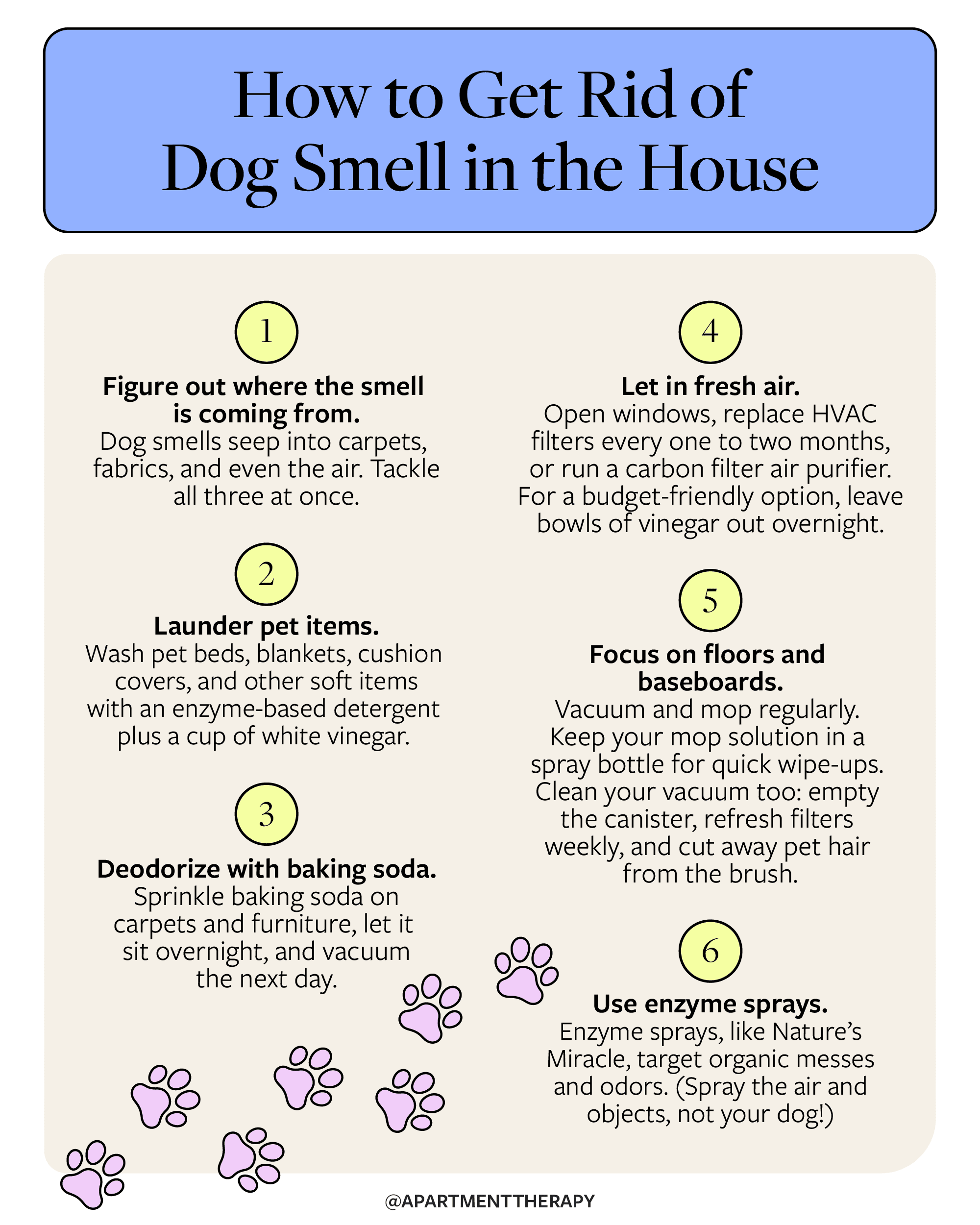
How to Get Rid of Pet Odor in House Naturally
The most effective odor removal strategy combines cleaning, ventilation, grooming, and prevention.
Wash Pet Bedding Weekly
Pet beds absorb oils, saliva, dirt, and fur every day.
For best results:
- Wash removable covers weekly.
- Use fragrance-free detergent.
- Dry completely before reuse.
- Replace heavily worn bedding.
This simple habit alone can dramatically reduce household pet odors.
Clean Upholstery and Soft Surfaces
Couches, chairs, blankets, and rugs often harbor the strongest odors.
Focus on:
- Sofa cushions
- Throw blankets
- Curtains
- Area rugs
- Pet resting areas
Steam cleaning can help remove deeply embedded bacteria and odor-causing residue.
Improve Indoor Air Circulation
Fresh air is one of the simplest odor-fighting tools available.
Open windows whenever possible and use:
- Ceiling fans
- Portable fans
- Air purifiers with HEPA filters
- HVAC filters designed for pet households
Better airflow helps remove airborne particles before they settle onto surfaces.
The Hidden Connection Between Pet Hair and Pet Odor
Many homeowners focus exclusively on cleaning stains while overlooking pet hair.
This is a major mistake.
Pet hair carries oils, dander, dirt, saliva, and odor-causing particles throughout the home. Even if your floors look clean, embedded fur can continue releasing unpleasant smells.

Why Removing Pet Hair Matters
When pet hair accumulates inside furniture fibers and carpets, it creates an ideal environment for odors to develop.
Removing fur regularly can:
- Reduce odor buildup
- Improve indoor air quality
- Decrease allergens
- Extend furniture lifespan
- Make deep cleaning more effective
A Practical Solution for Pet Owners
At PetNest Home, we help pet owners tackle one of the biggest odor contributors: trapped pet fur.
Our reusable, eco-friendly tools include:
- Mini Fur Scraper for removing deeply embedded pet hair from carpets, couches, stairs, rugs, and vehicle interiors.
- De-Shedding Glove for capturing loose fur directly from your pet before it spreads throughout your home.
Because less fur accumulates around your home, fewer odor-causing particles remain trapped in fabrics and soft surfaces.
Best Cleaning Schedule to Prevent Pet Odors
| Task | Frequency |
|---|---|
| Wash pet bedding | Weekly |
| Vacuum floors | 2–4 times weekly |
| Remove pet hair from furniture | Every 2–3 days |
| Clean litter box | Daily |
| Groom pets | Weekly |
| Deep clean carpets | Every 3–6 months |
| Replace HVAC filters | Every 2–3 months |
How Grooming Helps Reduce Household Odors
A clean pet contributes to a cleaner home.
Brush Regularly
Routine brushing removes loose fur, dirt, and dander before they spread throughout your living space.
Long-haired breeds especially benefit from frequent grooming.
Bathe When Appropriate
Dogs benefit from occasional bathing using veterinarian-approved shampoos.
However, excessive bathing can strip natural oils and actually increase odor problems.
Follow recommendations specific to your pet's breed and coat type.
Check for Underlying Health Issues
Persistent odors may indicate:
- Skin infections
- Dental disease
- Ear infections
- Anal gland problems
- Allergies
If your pet suddenly develops a strong odor despite proper grooming, consult your veterinarian.
Common Mistakes That Make Pet Odors Worse
- Using air fresheners instead of cleaning the source.
- Ignoring pet hair buildup.
- Skipping upholstery cleaning.
- Waiting too long to clean accidents.
- Rarely washing pet bedding.
- Failing to groom shedding pets.
- Overlooking ventilation and air filtration.
Addressing these issues often produces faster results than buying expensive odor-masking products.
Expert Recommendations for Long-Term Odor Control
The American Kennel Club recommends consistent grooming, routine cleaning of pet bedding, and regular removal of loose fur as key strategies for maintaining a fresh-smelling home.
Professional cleaners also emphasize a layered approach:
- Remove pet hair.
- Wash fabrics.
- Clean odor sources.
- Improve airflow.
- Maintain regular grooming.
This combination provides lasting results instead of temporary fixes.
About the Author
This guide was created by the pet care team at PetNest Home, a brand dedicated to helping pet owners maintain cleaner, healthier homes through reusable pet hair removal and grooming solutions. Our recommendations are based on practical pet ownership experience, industry best practices, and trusted pet care resources.
Conclusion: A Fresh Home Starts With Consistent Pet Care
Learning how to get rid of pet odor in house isn't about covering smells with scented sprays. The real solution is identifying odor sources, removing trapped fur, maintaining clean bedding, improving ventilation, and establishing consistent grooming habits.
When you focus on prevention rather than temporary fixes, your home can stay fresh, welcoming, and comfortable for both pets and people.
Remember: pet odor often starts with pet hair. The less fur that accumulates in carpets, furniture, and fabrics, the easier it becomes to maintain a clean-smelling home.
Ready to Reduce Pet Hair and Odors?
Visit PetNest Home to discover our reusable Mini Fur Scraper and De-Shedding Glove—two eco-friendly, battery-free tools designed to help pet owners remove stubborn fur, reduce odor buildup, and enjoy a cleaner home every day.
Frequently Asked Questions
What causes the strongest pet odor in a house?
The most common causes include pet hair accumulation, dirty bedding, urine residue, litter boxes, and poor ventilation.
How often should I wash pet bedding?
Most pet experts recommend washing pet bedding at least once per week.
Can pet hair cause bad smells?
Yes. Pet hair traps oils, dander, saliva, dirt, and bacteria that contribute significantly to household odors.
Do air purifiers help remove pet odor?
Air purifiers with HEPA filtration can help reduce airborne particles and improve overall indoor air quality, especially when combined with regular cleaning.
What is the fastest way to reduce pet odor?
Remove pet hair, wash bedding, clean soft surfaces, improve ventilation, and address any accidents immediately for the fastest results.

