

How Do I Calm My Dog Before a Walk?
If your large dog turns every walk into a wrestling match, you are not alone. Many owners of strong dogs deal with jumping at the door, leash pulling, lunging at other dogs, spinning in circles, or dragging the person behind them before the walk has even started.
The good news is that calming your dog before a walk is possible. It does not mean “tiring them out completely” or forcing them to be perfect. It means lowering their excitement enough so you can clip the leash, step outside safely, and keep better control once real-world distractions appear.
For big, powerful dogs, the right routine and the right walking gear matter. A calm start, a secure fit, and better leash control can help protect your dog’s neck, reduce pulling, and give you more confidence on every walk.
Why Dogs Get So Excited Before Walks
Walks are a big event in your dog’s day. They bring movement, smells, people, dogs, squirrels, cars, and freedom from the house. For some dogs, especially young, athletic, or under-stimulated large breeds, the sight of a leash can trigger instant excitement.
Your dog may also have learned that wild behavior makes the walk happen faster. If they jump, bark, and pull you to the door, and then the door opens, the pattern is accidentally rewarded.
Common reasons dogs get overexcited before walks include:
- Anticipation: The leash, shoes, keys, or harness predict outdoor fun.
- Excess energy: Strong dogs often need both physical and mental outlets.
- Lack of impulse control: They have not learned how to wait calmly.
- Reactivity: They expect triggers outside, such as dogs, people, bikes, or traffic.
- Previous reinforcement: Pulling or jumping may have worked in the past.
According to general dog behavior guidance from VCA Hospitals dog behavior resources, consistent training and predictable routines are important for improving behavior. That is especially true when your dog is already excited before you leave the house.
Start Before the Leash Comes Out
If your dog explodes with energy the moment they see the leash, begin earlier. Your goal is to make the pre-walk routine boring and predictable, not a sudden announcement that says, “We are leaving right now!”
Use a Calm Pre-Walk Routine
Try this simple routine before each walk:
- Put on your shoes calmly and avoid excited talking.
- Pick up the leash or harness without rushing to the door.
- If your dog jumps or barks, pause and wait quietly.
- Reward calm behavior with gentle praise or a treat.
- Only move forward when your dog has all four paws on the floor.
This teaches your dog that calm behavior makes the walk continue. Over time, the leash becomes less of a trigger and more of a normal part of the routine.
Practice “Leash On, Leash Off” Training
Many dogs think leash equals immediate walk. Break that pattern. Clip the leash on, give a treat, then remove it. Do this several times during the day when you are not going outside.
This simple exercise reduces the emotional explosion around walking gear. For large dogs that lunge or jump, it can make the difference between a chaotic exit and a controlled one.
Teach a Calm Doorway Exit
The doorway is often where owners lose control. Your dog is excited, your hands are full, and the outside world is waiting. For a strong dog, one sudden pull can create a safety risk.
Before opening the door, ask for a simple behavior your dog knows, such as “sit,” “wait,” or “look.” If your dog breaks position, close the door and reset. Keep your tone calm. You are not punishing your dog; you are teaching that calm behavior opens doors.
Start with very short sessions. Your dog may only be able to wait for one second at first. That is fine. Build gradually.
A Simple Doorway Exercise
- Attach the leash or harness indoors.
- Ask your dog to sit or stand calmly near the door.
- Touch the doorknob. If your dog lunges forward, remove your hand and wait.
- Open the door slightly. If your dog rushes, close it gently.
- When your dog stays calm, step out together.
This exercise gives your dog a clear job: calm behavior makes forward movement happen.
Why Collar Pressure Can Make Walks Harder
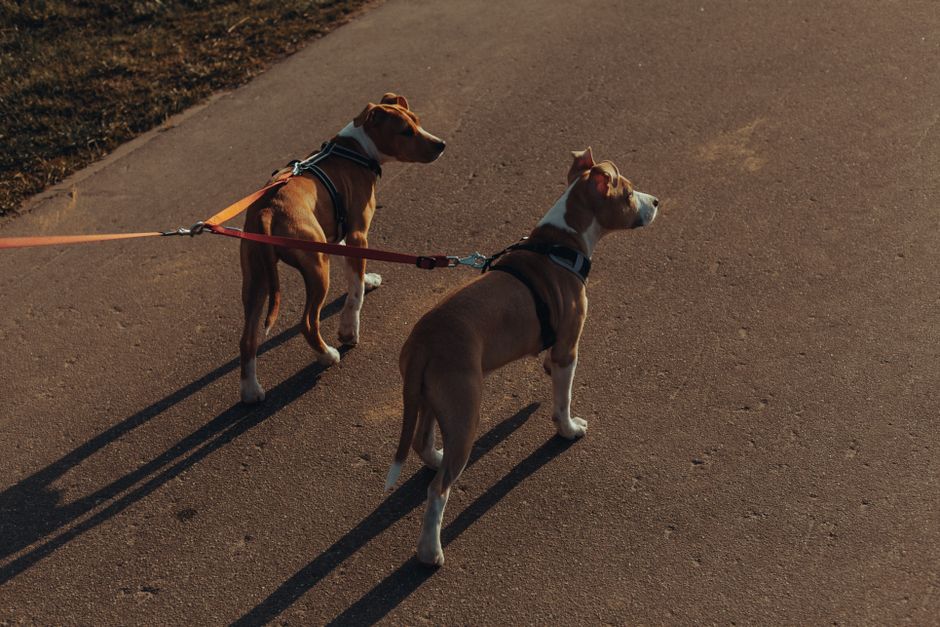
For small dogs, pulling may be annoying. For large, strong dogs, pulling on a collar can become a real control problem. When your dog surges forward, pressure goes directly onto the neck and throat area. This can cause coughing, gagging, discomfort, or more frantic pulling.
Some dogs pull harder when they feel pressure on the neck because they panic, brace, or become more aroused. This is one reason many owners of powerful dogs switch from a collar-only setup to a secure no-pull harness.
A harness does not replace training, but it can make training safer and more manageable. It distributes pressure across the body instead of concentrating it on the neck, and the right design can give you better chest and shoulder control.
Front-Clip vs Back-Clip Harness: Which Helps Calm Pulling?
Harness design matters. Not every harness helps with pulling. Some back-clip harnesses are comfortable but may allow strong dogs to lean into the leash and pull like a sled dog. A front-clip harness can help redirect the dog’s chest toward you when they surge forward.
| Harness Type | Best For | Possible Challenge | Control Level for Strong Dogs |
|---|---|---|---|
| Back-Clip Harness | Relaxed walks, casual outings, dogs that do not pull much | May encourage strong dogs to lean and pull forward | Moderate |
| Front-Clip Harness | Leash pulling, training, redirecting attention | Needs proper fit to avoid shifting | High |
| Dual-Clip Harness | Training flexibility, strong dogs, mixed environments | Requires practice with leash handling | Very High |
For many owners asking, “How do I calm my dog before a walk?”, the answer includes both behavior training and equipment that helps prevent the dog from practicing full-force pulling. A heavy-duty no-pull control harness can make those first few minutes outside feel much more manageable.
Fit Matters: Comfort, Shoulders, and Control
A harness should be snug but not tight. You should usually be able to fit two fingers between the harness and your dog’s body. It should not rub behind the front legs, slide around the chest, or restrict natural movement.
Owners sometimes worry about shoulder movement, especially with big dogs that walk daily or go on long adventures. If you are wondering can a harness hurt my dog s shoulders, the short answer is that design and fit are key. A well-fitted harness should support control without blocking comfortable movement.
If you have a growing puppy or adolescent large breed, harness introduction can start early when done gently and with proper sizing. For more guidance, read at what age can a dog start wearing a harness before choosing gear for a young dog.
Calming Exercises Before You Leave
You do not need a long training session before every walk. In fact, short and repeatable exercises work best. The goal is to shift your dog’s brain from “explode forward” to “check in with my person.”
1. The Treat Scatter
Before clipping the leash, scatter a few small treats on the floor and let your dog sniff them out. Sniffing naturally encourages many dogs to slow down and use their nose instead of their muscles.
2. The “Find Me” Check-In
Say your dog’s name. When they look at you, reward immediately. Repeat five times. This builds the habit of checking in before the walk starts.
3. The Calm Harness Clip
If your dog jumps when you pick up the harness, hold it still and wait. When your dog pauses, lowers their body, or stands calmly, reward and continue. If they get wild again, pause again.
4. The Indoor Mini Walk
Before stepping outside, walk a small loop inside your home. Practice stopping, turning, and rewarding a loose leash. This helps your dog remember that the leash has rules before distractions appear.

Leash Control Tips for Strong Dogs Outside
Once you are outside, your job is not to overpower your dog. It is to manage distance, direction, and attention. Even with a strong harness, good leash handling matters.
- Keep the leash short but relaxed: Avoid constant tight tension, which can increase pulling.
- Use your body direction: Turn before your dog reaches the end of the leash.
- Reward check-ins: Praise or treat when your dog looks back at you.
- Create distance from triggers: Do not force greetings with dogs or strangers.
- Stop forward movement when pulling starts: Pulling should not get your dog closer to the exciting thing.
Training resources such as WagWalking leash training guidance commonly emphasize consistency and positive reinforcement. For strong dogs, consistency is especially important because every successful pull teaches them that pulling works.
What About Reactive Walking?
If your dog barks, lunges, growls, or jumps when they see other dogs, people, bikes, or cars, they may be reactive. Reactivity does not always mean aggression. It can come from fear, frustration, excitement, or lack of social skills.
Before a walk, reactive dogs need calm structure. During the walk, they need distance and guidance. Do not wait until your dog is already lunging to respond. Instead, notice early signs such as staring, stiff posture, closed mouth, raised tail, or faster breathing.
When you see a trigger:
- Increase distance calmly.
- Turn and walk the other way if needed.
- Reward your dog for looking at you.
- Avoid tight leash pressure that may add frustration.
- Use secure gear that helps you guide the chest and body safely.
If your dog has bitten, injured someone, or is extremely difficult to control, work with a qualified positive-reinforcement trainer or veterinary behavior professional. Safety comes first.
How a Heavy-Duty No-Pull Harness Supports Calmer Walks
A heavy-duty no-pull harness is helpful because it gives you more control over your dog’s body without relying on the neck. For big dogs that pull, jump, or get overstimulated, that extra control can help you stay calm too.
Look for a harness with:
- Strong stitching and durable materials for powerful dogs
- A front clip for no-pull training and redirection
- A back clip for relaxed walking or controlled outdoor activities
- Adjustable straps for a secure fit
- A comfortable chest design that does not dig or rub
- A sturdy handle for close control when needed
If you are comparing options, the petnest k9 no pull contro harness is designed for owners who need strength, comfort, and better handling on daily walks.
A Realistic Pre-Walk Plan You Can Start Today
Here is a simple plan for the next seven days:
Days 1-2: Calm Gear Practice
Pick up the harness several times a day without going outside. Reward calm behavior. Clip it on, give a treat, and remove it.
Days 3-4: Doorway Control
Practice opening and closing the door while your dog waits. Keep sessions short and positive.
Days 5-6: Short Controlled Walks
Take shorter walks in quieter areas. Reward attention, loose leash moments, and calm behavior around mild distractions.
Day 7: Review and Adjust
Notice what improved. Did your dog jump less? Pull less at the door? Check in more often? Keep building from there.
Progress may be gradual, especially with strong dogs that have practiced pulling for months or years. But every calm repetition helps.

FAQ: Calming a Dog Before a Walk
Should I wait until my dog is calm before walking?
Yes, but keep expectations realistic. You do not need your dog to be perfectly still. Wait for a calmer moment, such as four paws on the floor, a brief pause, or eye contact, then continue the routine.
Is a harness better than a collar for a dog that pulls?
For many strong dogs, yes. A harness can reduce pressure on the neck and give you better control over the chest and body. A front-clip or dual-clip harness is usually more helpful for pulling than a basic back-clip harness.
Why does my dog pull harder when I pull back?
Many dogs naturally resist pressure. When you pull backward, they may brace and pull forward. Instead, try changing direction, stopping calmly, rewarding check-ins, and using a front-clip harness to redirect movement.
How long does it take to calm an excited dog before walks?
Some dogs improve in a few days, while others need several weeks of consistent practice. Dogs with long-standing pulling habits or reactivity may need more time and professional support.
Can a no-pull harness stop all pulling immediately?
A no-pull harness can make pulling easier to manage, but it works best with training. Think of it as a control and safety tool that supports better habits rather than a magic fix.
Conclusion: Calm Starts Before the First Step
So, how do you calm your dog before a walk? Start with a predictable routine, reward calm behavior, practice doorway control, and use walking gear that gives you safer, more comfortable control.
For owners of large, strong dogs, this is not just about convenience. It is about protecting your dog’s neck, reducing leash battles, improving confidence, and making walks enjoyable again. With patience and the right harness, you can stop fighting the leash and start building better walks one step at a time.
Ready for Safer, Easier Walks?
If your big dog pulls, jumps, lunges, or gets too excited outside, a heavy-duty no-pull harness can help you feel more secure and in control. Explore the Big Dog Control Harness and give yourself and your dog a calmer, more confident way to walk together.
Author Note
Written by the PetNest Home Editorial Team. Our goal is to help dog owners choose practical, comfortable, and safer walking solutions for everyday life with strong, energetic dogs.

