

How Often Should You Really Bathe a Dog with Sensitive Skin?
If your dog has sensitive skin, bath time can feel confusing. Bathe too often, and you may strip away the natural oils that protect their skin. Wait too long, and allergens, dirt, dander, and odor can build up, making itchiness worse. So, how often should you really bathe a dog with sensitive skin?
For many dogs with sensitive skin, a bath every 4 to 6 weeks is a comfortable starting point. However, the best schedule depends on your dog’s coat type, allergies, lifestyle, skin condition, and the products you use. Some dogs may need medicated baths more often under veterinary guidance, while others do better with fewer full baths and more brushing in between.
At PetNest Home, we focus on practical, low-stress grooming routines that support both your dog’s comfort and a cleaner home. This guide will help you find the right bathing rhythm without overdoing it.

Quick Answer: The Best Bathing Schedule for Sensitive Skin
Most dogs with sensitive skin should be bathed about once every month to six weeks, unless your veterinarian recommends otherwise. Dogs with diagnosed skin allergies, yeast issues, hot spots, or dermatitis may need a different schedule using a specific shampoo prescribed by a vet.
If your dog is generally healthy but easily gets dry, flaky, or itchy after baths, less frequent bathing is usually better. Instead of relying on constant washing, use gentle grooming, regular brushing, paw wipes after walks, and fur removal tools to keep your dog and home fresh.
Why Sensitive Skin Needs a Different Bathing Routine
A dog’s skin has a natural protective barrier. This barrier helps lock in moisture and defend against irritants. When you bathe too often, especially with harsh shampoos, that barrier can weaken. The result may be dryness, redness, scratching, dandruff, or even more odor as the skin tries to rebalance itself.
Sensitive skin may be caused by:
- Environmental allergies such as pollen, dust, or grass
- Food sensitivities or intolerances
- Flea allergy dermatitis
- Dry indoor air or seasonal changes
- Harsh shampoos or scented grooming products
- Underlying skin infections or medical conditions
- Breed-related skin or coat traits
If your dog’s skin is consistently red, greasy, scabby, smelly, or painful, it is best to speak with your veterinarian before adjusting the bathing routine. Bathing can help, but it should not replace proper diagnosis and treatment.
How Often Should You Bathe a Dog with Sensitive Skin by Situation?
There is no one-size-fits-all answer, but the table below gives a helpful starting point.
| Dog’s Situation | Suggested Bathing Frequency | Best Approach |
|---|---|---|
| Mildly sensitive or dry skin | Every 4 to 6 weeks | Use a gentle, fragrance-free dog shampoo and moisturising conditioner. |
| Allergy-prone dog | Every 2 to 4 weeks, or as advised by a vet | Rinse allergens off paws and coat between baths; consider vet-approved shampoo. |
| Dog with medicated shampoo plan | As directed by your veterinarian | Follow contact time and frequency instructions carefully. |
| Short-haired indoor dog | Every 6 to 8 weeks | Brush weekly and wipe paws after outdoor time. |
| Long-haired or double-coated dog | Every 4 to 8 weeks | Focus on brushing, de-shedding, and preventing mats between baths. |
| Dog that rolls in mud or strong odors | As needed | Spot clean when possible instead of doing a full bath every time. |
Signs You Are Bathing Your Dog Too Often
Over-bathing is one of the most common grooming mistakes for dogs with sensitive skin. Even if your intentions are good, too many baths can make skin problems worse.
Watch for these signs:
- Flaky or powdery dandruff after bathing
- More scratching than usual
- Redness around the belly, paws, ears, or armpits
- A dull, brittle, or dry coat
- Skin that feels tight or rough
- Increased odor shortly after bathing
- Your dog avoiding the bath due to discomfort
If you notice these symptoms, pause frequent bathing and switch to a gentler routine. You may also want to review your shampoo, water temperature, drying method, and brushing habits.
Signs Your Dog May Need a Bath Sooner
While over-bathing is a concern, waiting too long can also irritate sensitive skin. Dirt, dander, loose fur, and allergens can collect in the coat and cause discomfort.
Your dog may need a bath sooner if:
- They smell noticeably bad, even after brushing
- The coat feels greasy or sticky
- They have rolled in something dirty or irritating
- They are scratching after outdoor exposure
- Pollen, dust, or debris is visible in the coat
- Your vet has recommended regular bathing for a skin condition
For mild dirt, you may not need a full bath. A damp cloth, dog-safe grooming wipe, or paw rinse can often solve the problem without stressing the skin.

Choosing the Right Shampoo for Sensitive Skin
The product you use matters just as much as how often you bathe. Human shampoo is not recommended for dogs because a dog’s skin has a different pH balance. For sensitive dogs, choose a shampoo that is made specifically for canines and labelled as gentle, hypoallergenic, or fragrance-free.
Look for ingredients such as:
- Oatmeal
- Aloe vera
- Coconut-based cleansers
- Chamomile
- Glycerin
- Veterinarian-recommended moisturising agents
Avoid products with:
- Strong artificial fragrance
- Harsh detergents
- Alcohol-heavy formulas
- Essential oils unless approved by your vet
- Human shampoos or dish soap for routine bathing
If your dog has allergies, chronic itching, or recurring infections, ask your veterinarian before choosing a medicated shampoo. Medicated products can be very helpful, but they need to be used correctly.
How to Bathe a Dog with Sensitive Skin the Right Way
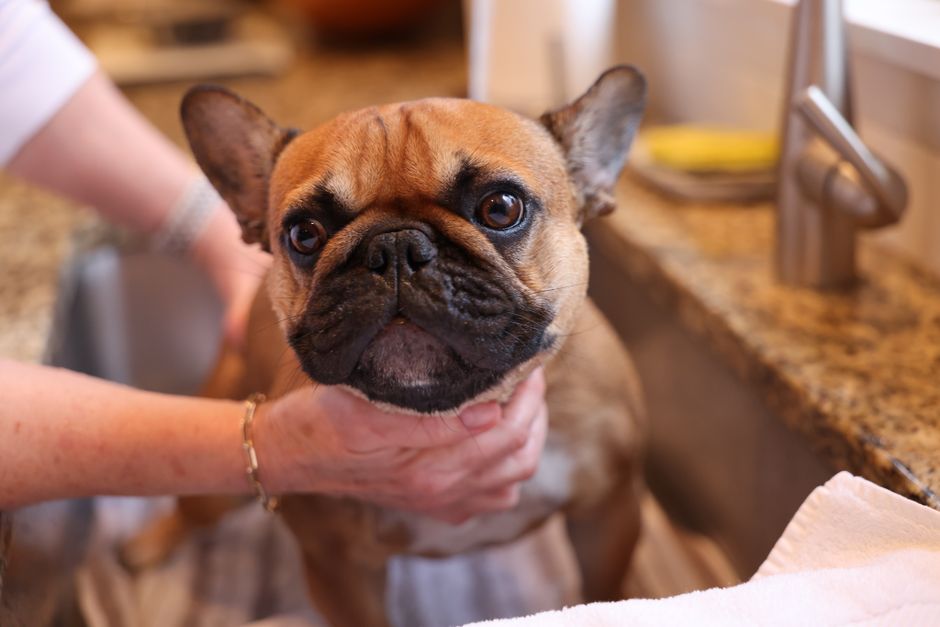
A calm, careful bath can make all the difference. Here is a simple routine that supports sensitive skin.
1. Brush before the bath
Remove loose fur, tangles, and debris before your dog gets wet. Wet mats can tighten and become painful. For shedding dogs, a gentle tool like the PetNest Home De-Shedding Glove can help lift loose hair while giving your dog a soothing massage.
2. Use lukewarm water
Hot water can dry and irritate the skin. Keep the water comfortably lukewarm, similar to what you would use for a baby’s bath.
3. Dilute shampoo if needed
Some gentle dog shampoos can be diluted with water to spread more easily. This helps you use less product and rinse more thoroughly.
4. Massage gently
Use your fingertips, not your nails. Focus on areas that collect dirt, such as paws, belly, chest, and tail area. Avoid scrubbing irritated spots aggressively.
5. Rinse longer than you think
Leftover shampoo residue is a major cause of itchiness. Rinse until the water runs clear and the coat no longer feels slippery.
6. Dry thoroughly but gently
Pat your dog with a soft towel. If using a dryer, choose a low or cool setting and keep it moving. Damp skin, especially under thick coats or folds, can become irritated.
What to Do Between Baths
For sensitive skin, the goal is not to bathe more. The goal is to keep your dog clean and comfortable with less irritation. Between baths, small habits can make a big difference.
- Brush regularly: Brushing removes loose fur, dander, and allergens before they settle into the coat.
- Wipe paws after walks: This is especially helpful during pollen season or after walking on treated grass.
- Wash bedding often: Clean blankets and beds reduce dust, dander, and odor buildup.
- Vacuum soft surfaces: Couches, rugs, and carpets can trap pet hair and irritants.
- Spot clean messes: Use a damp cloth for muddy paws or small dirty areas.
If pet hair collects in your home between grooming sessions, the PetNest Home Mini Fur Scraper is designed to remove deeply embedded fur from carpets, couches, and fabric surfaces without batteries, sticky refills, or waste. It is a practical way to keep your home cleaner without constantly bathing your dog.
For more home care tips, you may also enjoy our guide on how to keep house clean with multiple pets.
Bathing vs. Brushing: Which Matters More?
For many dogs with sensitive skin, brushing is just as important as bathing, and sometimes more important. Brushing helps distribute natural oils, remove loose hair, prevent mats, and reduce allergens sitting on the coat.
This is especially true for dogs that shed heavily. Instead of increasing bath frequency, improve your de-shedding routine. A soft grooming glove can be a good choice for dogs that dislike traditional brushes because it feels more like petting than grooming.
If shedding is a major challenge in your home, read our practical guide on how to stop dog from shedding.
Does Breed Affect Bathing Frequency?
Yes, breed and coat type can affect how often your dog needs a bath. Short-haired breeds may stay clean longer, while long-haired or double-coated breeds often need more brushing to prevent trapped dirt and loose undercoat. Dogs with skin folds may need special cleaning in those areas, while dogs with oily coats may develop odor faster.
Breed guides from reputable educational resources such as A-Z Animals can be helpful for understanding general coat traits, but your individual dog’s skin response should always guide the final routine.
If you want a broader overview for dogs without special skin concerns, see our complete article on how often should you bathe a dog.
When to Ask a Veterinarian
Sensitive skin can sometimes be managed with gentle grooming, but certain signs deserve professional attention. Contact your vet if your dog has:
- Open sores, bleeding, or scabs
- Constant licking or chewing at paws
- Hair loss or bald patches
- Strong yeasty or sour odor
- Red, swollen, or painful skin
- Recurring ear infections
- Itching that disrupts sleep or daily life
Your veterinarian may check for allergies, parasites, bacterial infections, yeast, hormonal issues, or food-related triggers. In some cases, the right treatment plan can reduce the need for frequent bathing altogether.
FAQ: Bathing Dogs with Sensitive Skin
Can I bathe my sensitive-skin dog once a week?
Weekly bathing may be too frequent for many dogs with sensitive skin unless your veterinarian has recommended it for a specific condition. If your dog needs frequent cleaning, ask your vet about the safest shampoo and whether rinses, wipes, or spot cleaning can help between full baths.
What is the best shampoo for a dog with sensitive skin?
A gentle, dog-specific, fragrance-free shampoo is usually best. Oatmeal and aloe-based formulas are popular choices for mild sensitivity. For ongoing itching, odor, or inflammation, use a veterinarian-recommended product.
Why does my dog itch more after a bath?
Post-bath itching can happen because of shampoo residue, water that is too hot, harsh ingredients, over-bathing, or incomplete drying. Rinse thoroughly, use lukewarm water, and switch to a gentler shampoo if needed.
Can I just rinse my dog with water?
Yes, a plain water rinse can be helpful after beach trips, muddy walks, or high-pollen outings. It removes surface irritants without the drying effects of shampoo. Just make sure to dry your dog well afterward.
How can I keep my dog smelling fresh without frequent baths?
Brush regularly, wipe paws and belly after walks, wash bedding, clean soft furniture, and remove loose hair from your home. A consistent grooming routine often keeps odor under control without over-bathing.
Conclusion: Less Can Be More for Sensitive Skin
So, how often should you really bathe a dog with sensitive skin? For most dogs, every 4 to 6 weeks is a sensible starting point, but your dog’s individual needs matter most. If baths leave your dog dry, flaky, or itchy, bathe less often and focus on brushing, paw cleaning, and home hygiene. If your dog has allergies or a medical skin condition, follow your veterinarian’s bathing plan.
The healthiest routine is gentle, consistent, and built around your dog’s comfort. Clean skin matters, but protecting the skin barrier matters too.
Keep Your Dog Comfortable and Your Home Fur-Free
Make grooming easier with reusable, eco-friendly tools from PetNest Home. Our De-Shedding Glove helps remove loose fur directly from your dog before it spreads, while our viral Mini Fur Scraper lifts stubborn embedded hair from carpets, couches, and fabric surfaces in seconds. Both are battery-free, built to last, and shipped worldwide.
Shop PetNest Home grooming and pet hair removal tools today and build a cleaner, calmer grooming routine for you and your dog.
Author Note: Written by the PetNest Home Editorial Team. Our content is created to help pet parents make practical, informed grooming and home-care decisions. For dogs with persistent itching, redness, sores, or skin infections, always consult a qualified veterinarian.

